
Black Tupelo: Color, Canopy & Ecological Value
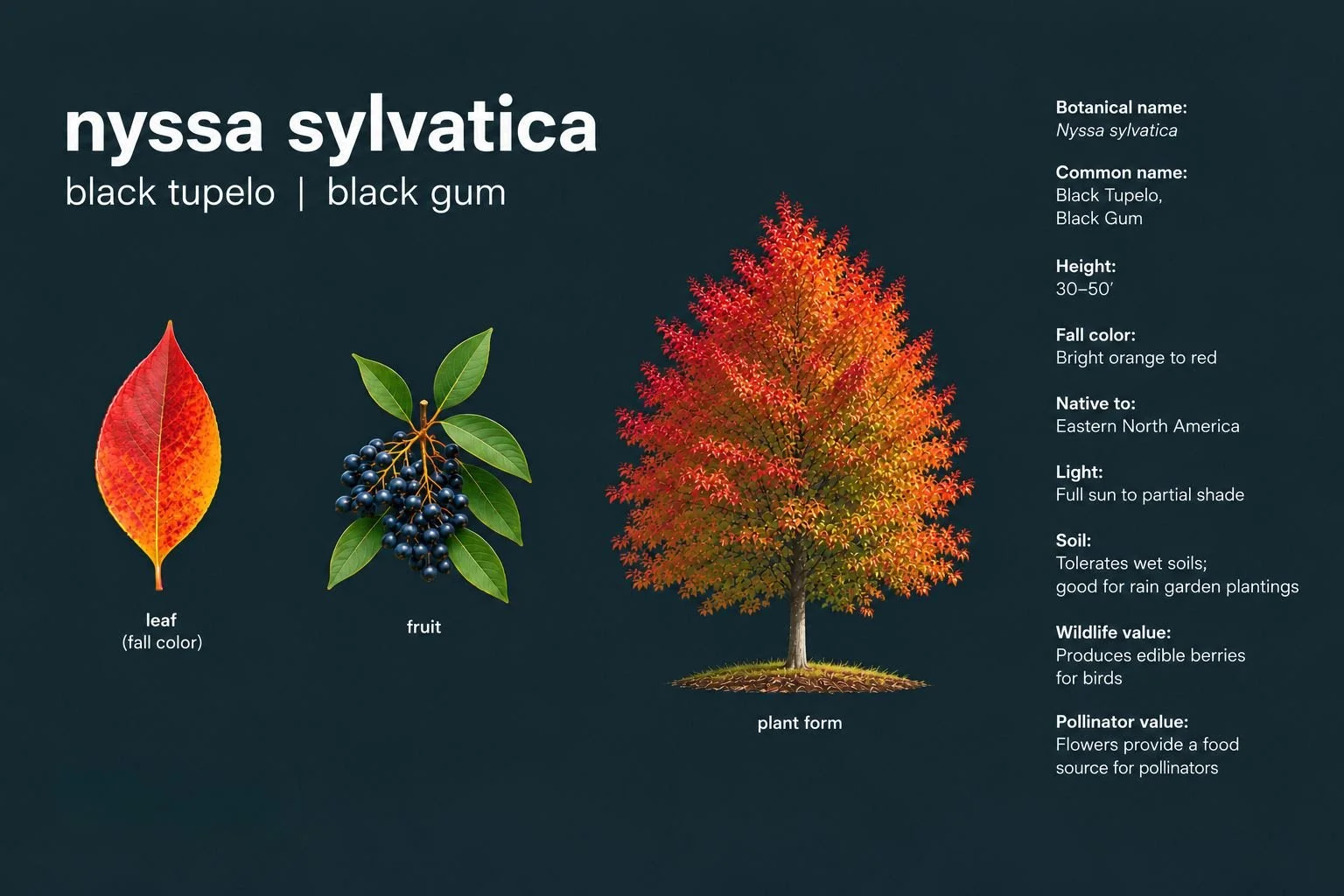
Nyssa sylvatica, commonly known as Black Tupelo or Black Gum, is a native deciduous tree known for its striking fall color and adaptability across a range of landscape conditions. Native to eastern North America, the species brings structure, seasonal interest, and ecological value to both designed landscapes and natural settings.
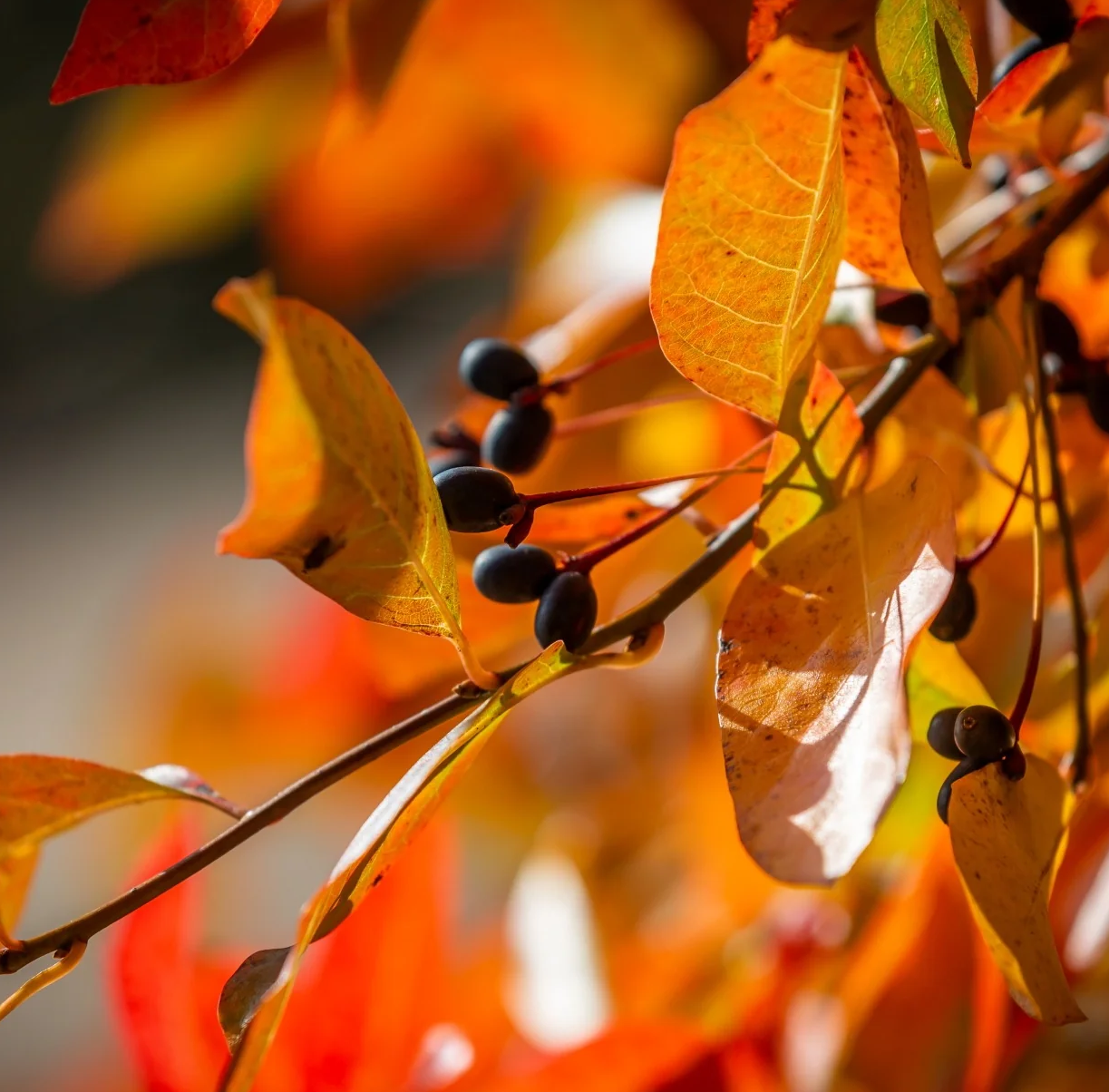
Typically reaching 30 to 50 feet in height, Black Tupelo develops into a substantial shade tree that can be incorporated into parks, streetscapes, and other larger landscape settings. Its foliage remains green throughout the growing season before transitioning to vivid shades of orange and red in the fall, making autumn one of the tree’s most distinctive seasons.
Beyond its seasonal color, Nyssa sylvatica offers important ecological benefits. Its flowers, while relatively inconspicuous, provide a valuable food source for pollinators. The tree also produces small fruits that contribute another source of food within the surrounding ecosystem.
Black Tupelo is also notable for its tolerance of wet soil conditions. This adaptability allows it to be incorporated into rain garden plantings and landscapes where managing periods of increased soil moisture is an important consideration. Its ability to serve as both a shade tree and part of a water-conscious planting strategy makes it useful across a variety of landscape applications.
In designed landscapes, Nyssa sylvatica demonstrates how a single species can contribute at multiple levels. It provides canopy and shade, supports pollinators, responds to wetter site conditions, and creates a strong seasonal presence through its fall foliage.
Thoughtful plant selection considers how species perform throughout the year and how they contribute to the larger landscape system. With its adaptability, ecological value, and unmistakable fall color, Black Tupelo offers both functional and visual value well beyond a single season.
Nyssa sylvatica’s adaptability allows it to be incorporated into rain garden plantings and landscapes where managing periods of increased soil moisture is an important consideration. Its ability to serve as both a shade tree and part of a water-conscious planting strategy makes it useful across a variety of landscape applications.
.