Echinacea Purpurea: Purple Coneflower
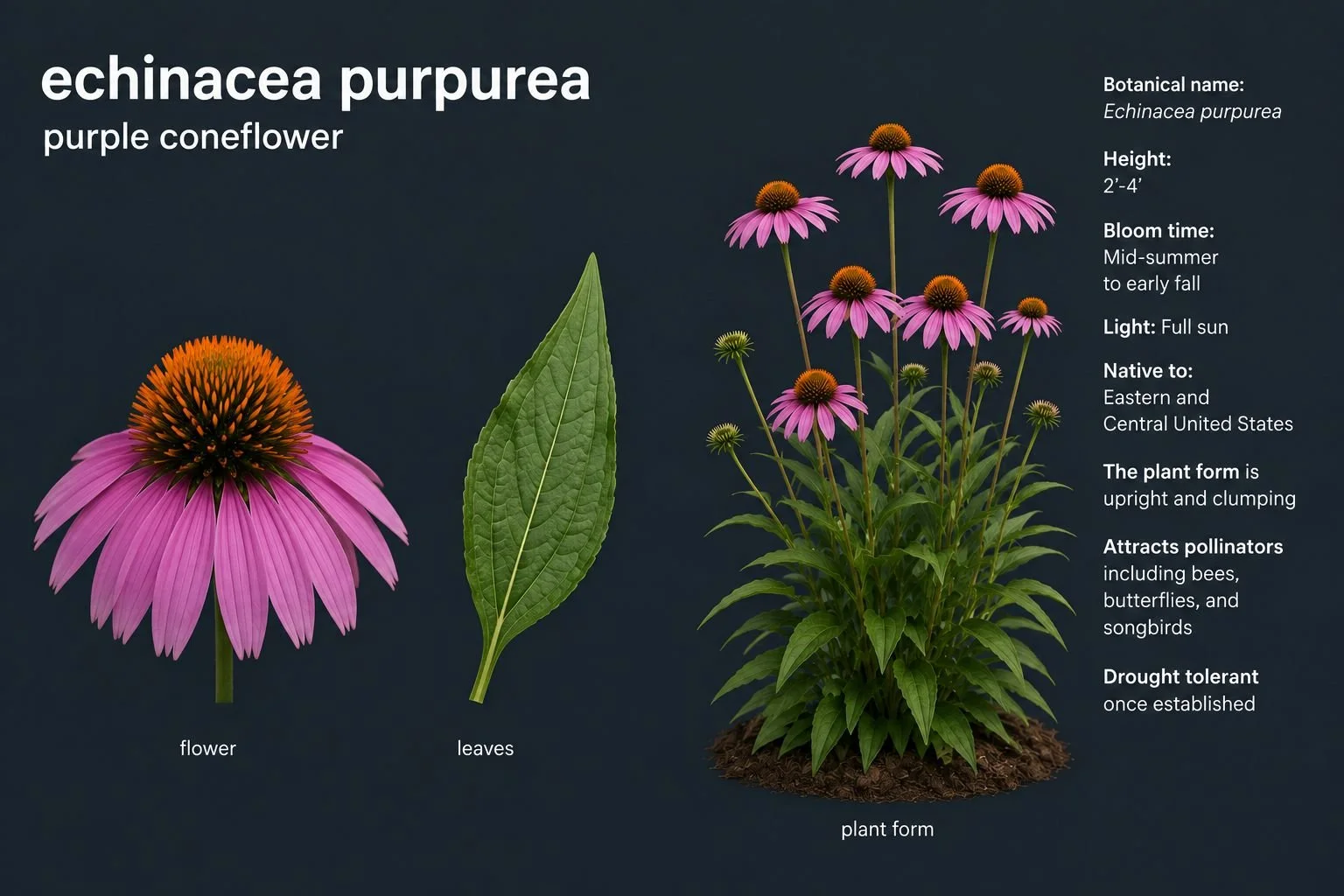
Echinacea purpurea, commonly known as Purple Coneflower, is one of the most recognizable native perennials in the eastern United States. Known for its vibrant purple-pink petals and distinctive copper-orange center, this long-blooming species brings color, texture, and ecological value to the landscape from early summer through fall.
A member of the Asteraceae family, Purple Coneflower typically reaches 2 to 5 feet in height and forms upright clumps that integrate well into both formal planting designs and naturalized landscapes. Its sturdy stems and prominent blooms create visual interest throughout the growing season, while the plant's strong vertical form allows it to stand out among surrounding grasses and perennials.
Beyond its ornamental qualities, Echinacea plays an important ecological role. The flowers attract a wide range of pollinators, including native bees, butterflies, and other beneficial insects. As the growing season progresses, the spent flower heads develop seeds that provide food for birds, particularly goldfinches, well into the fall and winter months.
Purple Coneflower thrives in full sun and adapts to a variety of soil conditions. Once established, it is drought tolerant, resilient, and requires relatively little maintenance. These characteristics make it a valuable choice for pollinator gardens, meadow plantings, and restoration projects throughout the region.
Landscape architects incorporate Echinacea to actively support broader ecological systems and strengthen regional habitat networks. These native installations increase local biodiversity and create dynamic landscapes that visibly respond to the changing seasons.
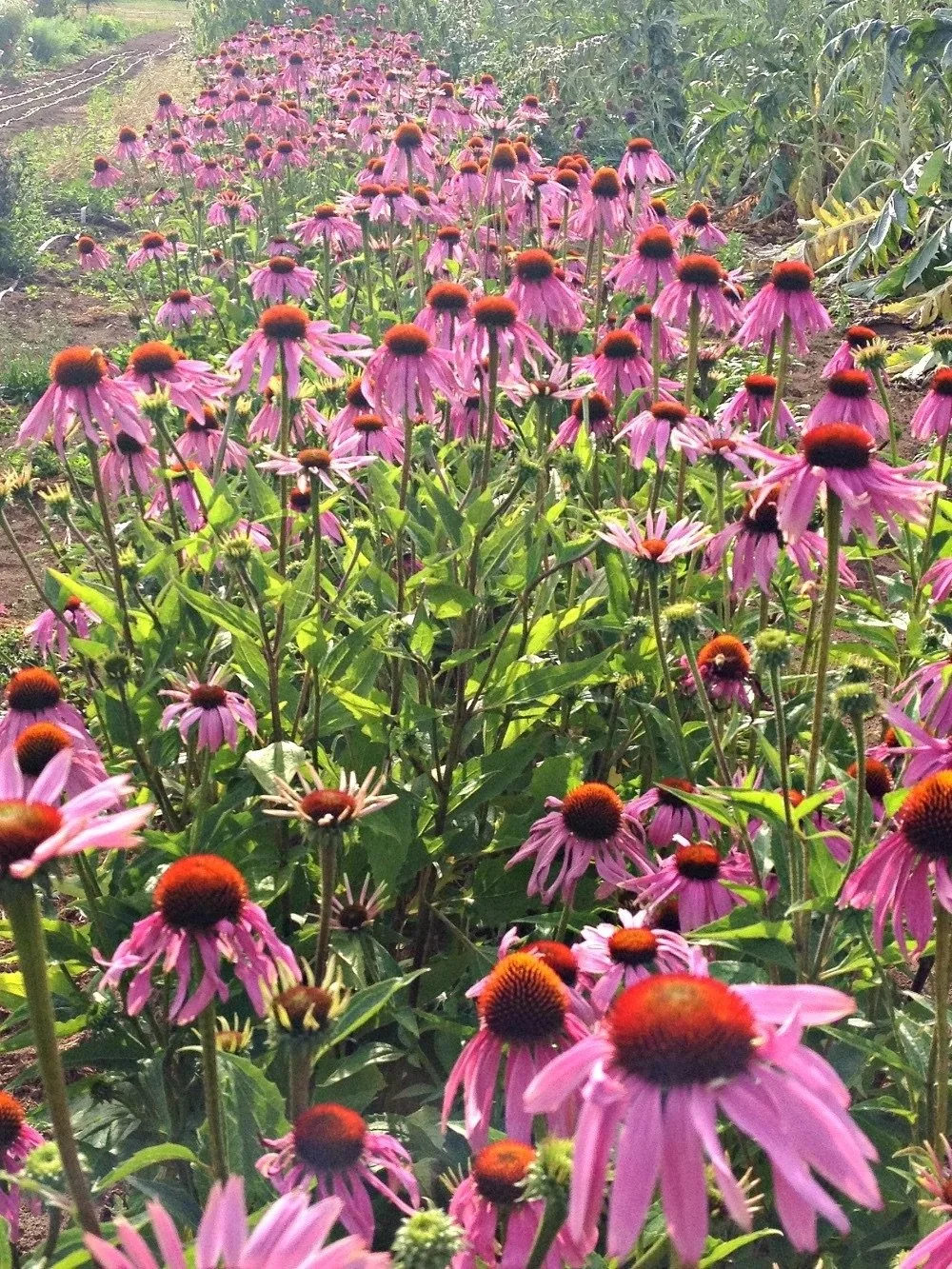
Landscape architects incorporate Echinacea to actively support broader ecological systems and strengthen regional habitat networks
.